🛠️ Welcome to Tech Behind Tools - Build Smart. Choose Right.


How To Extend Cordless Battery Life: 15 Proven Tips Every Power Tool User Should Know

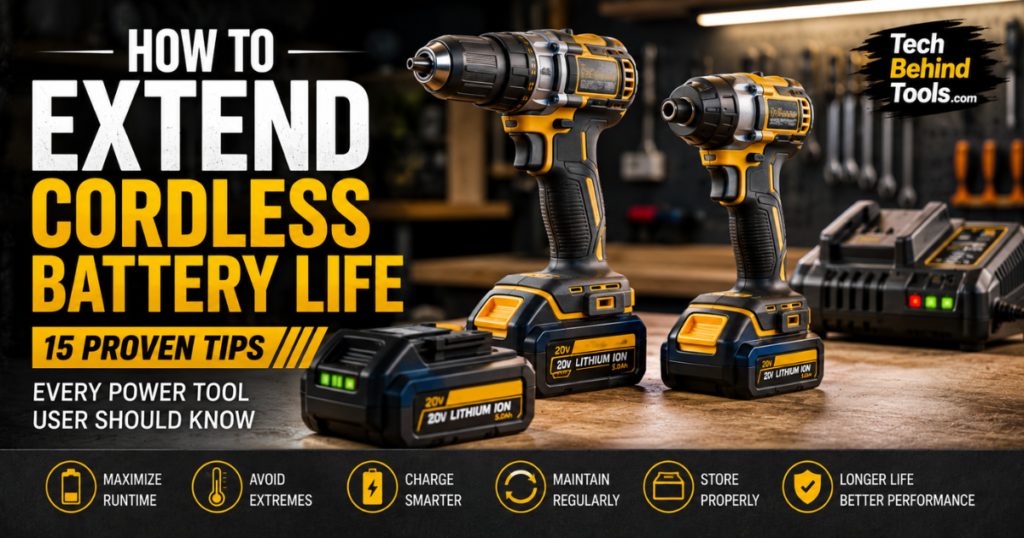
Cordless power tools have transformed the way we work. Whether you’re a professional contractor, workshop owner, carpenter, fabricator, electrician, plumber, or DIY enthusiast, cordless tools provide the freedom to work without extension cords and power outlets.
However, cordless tools are only as good as their batteries.
Many users unknowingly reduce battery life through poor charging habits, improper storage, and simple mistakes that can permanently damage expensive lithium-ion battery packs.
The good news is that most battery failures are preventable.
In this guide, we’ll cover practical battery care tips that can help extend cordless battery life, improve performance, and save money on premature battery replacements.
Watch Our Battery Care Video
Prefer watching instead of reading? Check out our battery maintenance videos on the TechBehindTools YouTube channel, where we regularly share practical workshop tips, tool maintenance guides, and buying advice.
Why Cordless Tool Batteries Fail Early
Modern cordless tools typically use lithium-ion batteries, which offer excellent power, fast charging, and long runtimes.
However, lithium-ion batteries are sensitive to:
- Excessive heat
- Deep discharge
- Improper charging
- Long-term storage at full charge
- Moisture exposure
- Physical damage
Understanding these factors is the first step toward maximizing battery lifespan.
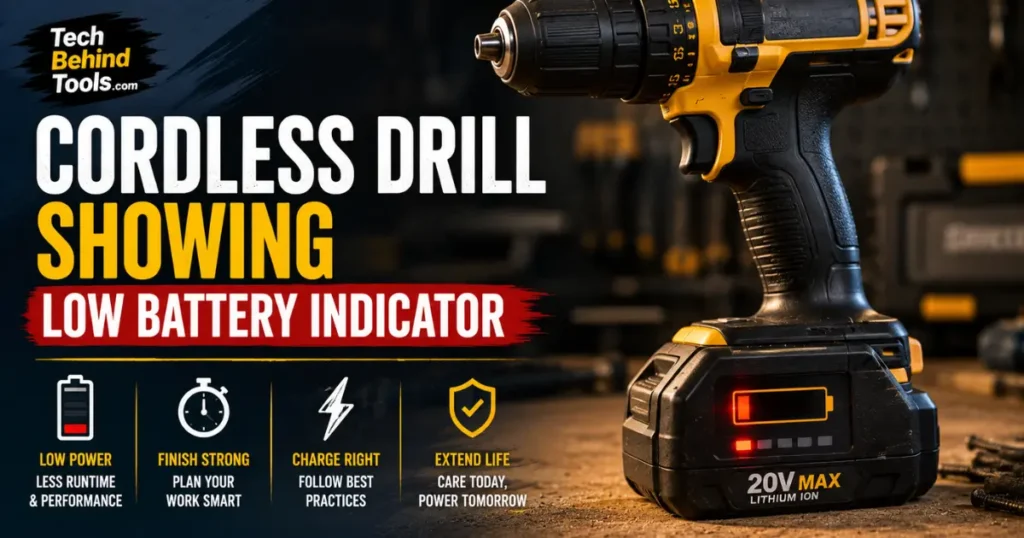
1. Avoid Completely Draining the Battery
One of the most common mistakes is running a battery until it is completely dead.
Modern lithium-ion batteries perform best when recharged before reaching extremely low charge levels.
If your tool starts losing power noticeably, it’s usually a good time to recharge the battery.
2. Let Hot Batteries Cool Before Charging
After heavy drilling, grinding, cutting, or demolition work, batteries often become warm.
Placing a hot battery directly onto the charger can generate additional heat and increase battery stress.
Allow the battery to cool naturally before charging.
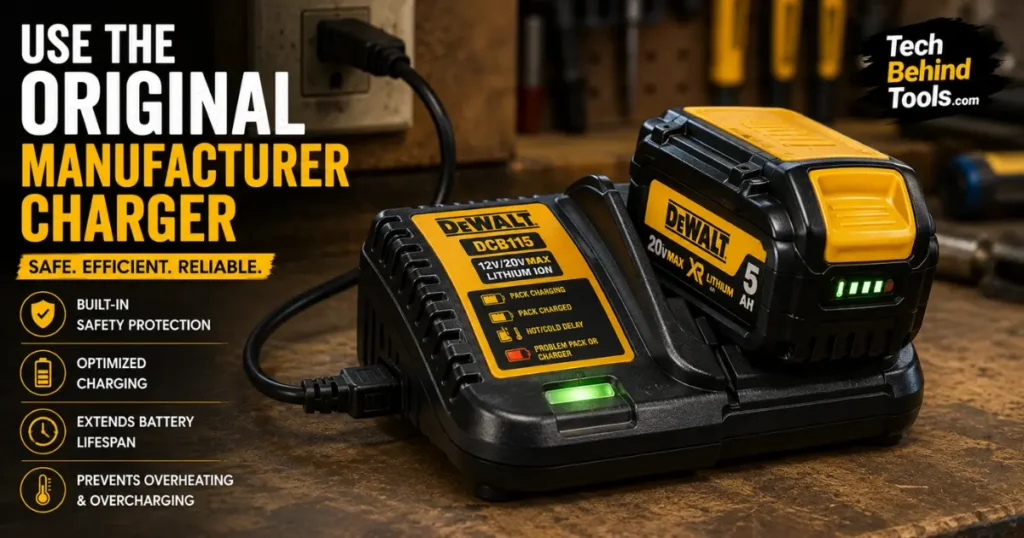
3. Use the Original Charger Whenever Possible
Battery chargers are designed specifically for the battery chemistry and charging profile of the manufacturer.
Using the correct charger helps ensure safe charging and maximum battery life.
4. Store Batteries in a Cool, Dry Location
Heat is one of the biggest enemies of lithium-ion batteries.
Avoid storing batteries:
- Inside parked vehicles
- Near windows with direct sunlight
- Close to heaters
- In extremely hot workshops
A cool and dry storage location significantly improves battery longevity.
5. Don’t Leave Batteries in Direct Sunlight
Construction sites and workshops often expose tools to direct sunlight for hours.
Even when not in use, battery temperatures can rise dramatically.
Whenever possible, keep batteries shaded or stored inside a toolbox.
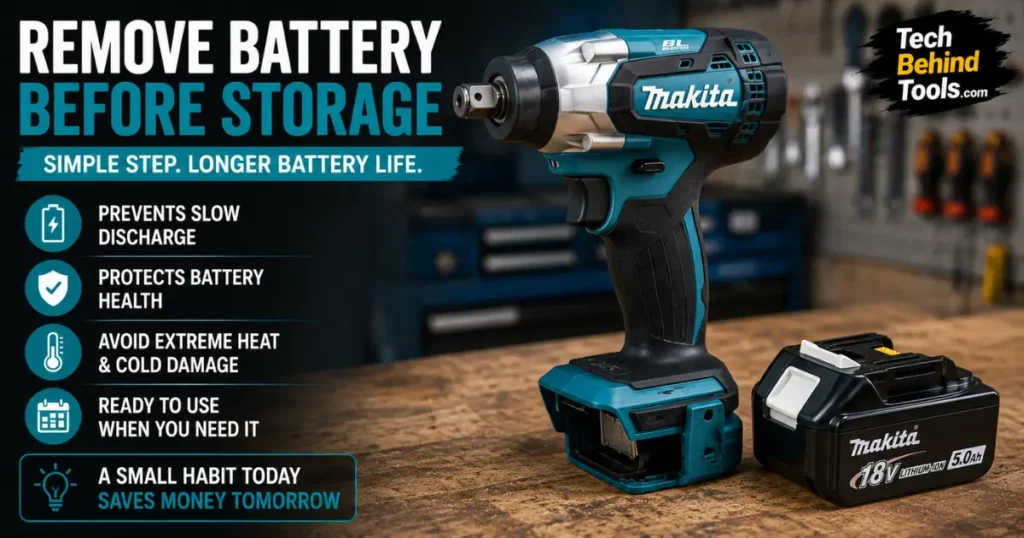
6. Remove Batteries from Unused Tools
If a tool won’t be used for several weeks or months, remove the battery before storage.
This reduces the risk of slow discharge and protects battery terminals from dust and moisture.
7. Keep Battery Terminals Clean
Dust, metal particles, moisture, and debris can accumulate around battery contacts.
Dirty terminals can reduce charging efficiency and create poor electrical connections.
Regularly inspect and clean contacts using a dry cloth or soft brush.
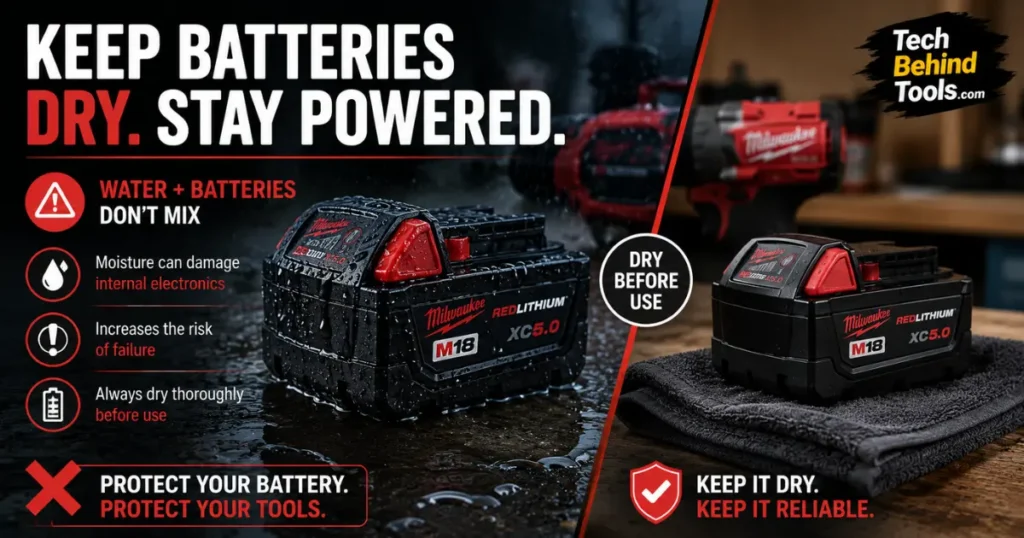
8. Avoid Moisture and Water Exposure
Although many cordless tools are built for job site conditions, batteries should never be exposed to excessive water.
Moisture can damage internal electronics and increase the risk of failure.
If a battery becomes wet, dry it thoroughly before use.
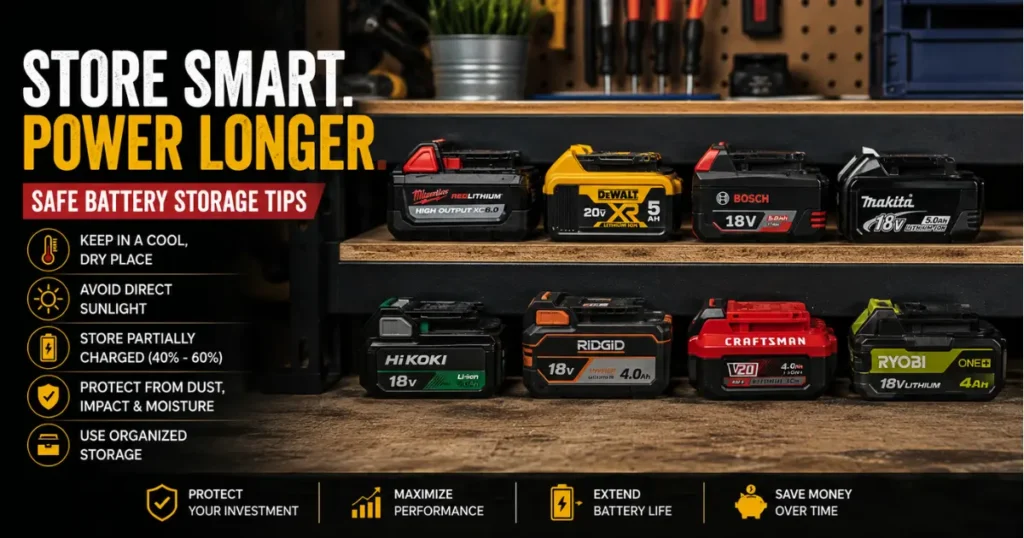
9. Don’t Store Fully Charged Batteries for Long Periods
If you’re storing batteries for several months, avoid leaving them at 100% charge.
Most manufacturers recommend storing lithium-ion batteries partially charged.
This reduces long-term cell stress.
10. Avoid Frequent Overheating
Heavy-duty applications such as:
- Metal cutting
- Concrete drilling
- Demolition work
- Continuous grinding
can generate significant battery heat.
If batteries become excessively hot, allow them to cool before continuing.
Rotating between multiple batteries can help prevent overheating.
11. Use the Right Tool for the Job
Using a small cordless drill for demanding applications can overload both the motor and battery.
Choose tools with appropriate power ratings for the work being performed.
This reduces battery stress and improves overall performance.
12. Keep Spare Batteries in Rotation
Professionals often own multiple batteries.
Instead of constantly using the same battery pack, rotate usage among all batteries.
This helps distribute wear more evenly.
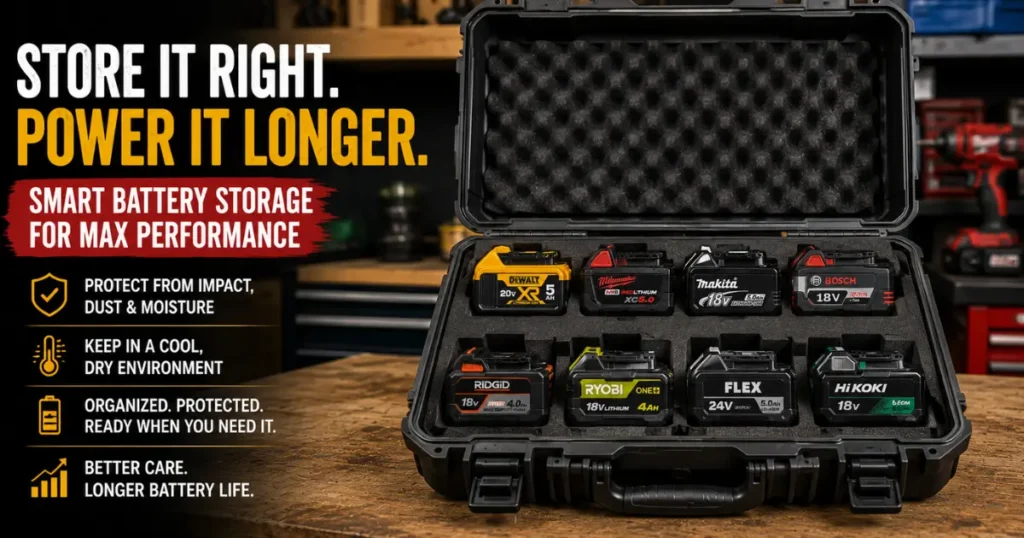
13. Protect Batteries During Transport
Batteries can suffer damage from impacts, vibration, and accidental drops.
Use:
- Tool cases
- Battery storage organizers
- Protective tool bags
to keep them safe during transport.
14. Avoid Cheap Counterfeit Batteries
Low-cost replacement batteries may seem attractive, but many lack proper cell balancing, thermal protection, and safety electronics.
Poor-quality batteries often fail early and may even damage tools.
Choose batteries from reputable manufacturers whenever possible.
15. Follow Manufacturer Recommendations
Different battery platforms may have specific care requirements.
Always review the user manual for:
- Charging guidelines
- Storage recommendations
- Temperature limits
- Maintenance instructions
Following manufacturer recommendations is one of the easiest ways to maximize battery lifespan.
Common Battery Myths
Myth: You Must Fully Discharge Lithium-Ion Batteries
False.
Unlike older battery technologies, lithium-ion batteries generally perform better when they are not repeatedly discharged to zero.
Myth: Keeping Batteries on the Charger Forever Improves Performance
False.
While many modern chargers stop charging automatically, leaving batteries permanently connected is generally unnecessary.
Myth: All Batteries Last the Same Amount of Time
False.
Battery lifespan depends heavily on charging habits, storage conditions, workload, and environmental temperatures.
Recommended Products For Better Battery Life
| Product Category | Why It Helps | Recommended Product |
|---|---|---|
| Smart Battery Charger | Ensures proper charging cycles | Bosch GAL 18V-40 Fast Charger |
| Tool Storage Box | Protects batteries from dust, moisture, and accidental damage | Stanley Essential Tool Box |
| Silica Gel Packs | Helps reduce moisture exposure during storage | Reusable Silica Gel Desiccant Packs |
| Contact Cleaner Spray | Keeps battery terminals and charger contacts clean | WD-40 Specialist Contact Cleaner |
| Air Blower | Removes dust from tools, batteries, and chargers | Bosch GBL 650 Professional Blower |
| Temperature & Humidity Meter | Monitors workshop conditions that affect battery health | FreshDcart Digital Hygrometer |
| Surge Protection Board | Protects chargers from power fluctuations and voltage spikes | GM Modular Surge Protector Extension Board |
Affiliate Disclosure: Some links on this page may be affiliate links. If you purchase through them, we may earn a small commission at no extra cost to you. We only recommend products that we genuinely believe provide value to our readers.
Continue Learning
Tool Care & Maintenance
- How To Drill Metal Properly (Without Burning Your Drill Bits)
- How To Drill Ceramic Tiles Without Cracking Them
Workshop Safety
- Best Safety Gloves For Construction, Industrial & Mechanical Work
- Best Respirator Masks & Dust Masks For Grinding, Cutting, Construction & Industrial Work
Workshop Tips & Tricks
Final Thoughts
Cordless batteries are one of the most expensive consumable components of modern power tools. Fortunately, a few simple habits can dramatically improve battery lifespan and performance.
Avoid excessive heat, charge batteries properly, store them correctly, and keep them clean. These small steps can add years of life to your battery packs and help you get the most from your cordless tools.
If you use cordless tools regularly, developing good battery care habits today can save you significant money and frustration in the future.
Have a battery maintenance tip that works well for you? Let us know in the comments below.